Mason
Happiness for BeginnersMason is a college student on the BCSC wilderness course whose speed, taunting, and disregard for the group make him one of its most disruptive hikers. First introduced as someone hoping for a near-death experience, he becomes Flash as he races ahead of the slower participants; Helen’s other label for him, the Meanie of the Mountains, captures the cruelty beneath that bravado. His role in the group sharpens when he takes control of Helen’s map and chooses a shortcut that departs from the planned route.
Identity and Introduction
At the course orientation, Mason identifies himself as a junior at the University of North Carolina, taking the course for college credit and hoping for a near-death experience. His introduction places him among the many students attending for credit, but his stated appetite for danger gives him a distinctive first impression. He is already an energetic presence when Beckett asks the group about practical wilderness matters: Mason raises his hand to ask what they will do with their poo, including whether they must carry it out in plastic bags. Beckett confirms that they will keep it in their packs with their kitchen supplies, an answer that leaves the room holding its breath.
Mason’s early scenes thus pair a blunt, practical question with a more troubling kind of boldness. The orientation moment is comic, but his later conduct shows that his willingness to speak up is part of a wider tendency to make other people the targets of attention. He is not introduced through a history of his own; instead, the group and Helen come to know him through what he does to them on the trail.
Conduct on the Trail
Mason’s impatience is apparent on the first hike. When Helen slips while putting on her pack and Beckett stops the group to address the injury, Mason shouts from the back that they have not even started yet. His response treats the delay as an inconvenience, rather than as a safety issue Beckett considers serious enough to halt the group for. The moment anticipates the tension between Mason’s desire to keep moving and the course’s demands for collective responsibility.
By lunchtime, Helen has watched him pick at several people’s weaknesses. When Ron asks repeated questions about reading a topographical map, Mason turns his name into Mapron, a play on moron. After Hugh trips on a branch, Mason pelts him with branches at stops and reminds him not to trip. He also insults each of the girls as he passes them, calling them heifers and announcing that a real hiker is coming through. Helen describes him as a meanness overachiever: the phrase makes his bullying sound almost like a competition he is determined to win.
His behavior is not limited to quick insults. Helen says people who cross him may later be punished even if they appeared to get their way in the moment. He might draw the group’s attention to food in their teeth, stalk someone who has walked away alone to relieve themselves and growl like a bear when their pants are down, or simply trip them along the trail. These examples make humiliation a recurring method: Mason looks for moments when another person is exposed or vulnerable and turns them into an opportunity to assert himself.
Flash and the Hiking Group
Mason’s nickname reflects both his speed and the strain that speed places on the group. As nicknames spread among the hikers, he becomes Flash because he has never learned to slow down and hike with the others. When the group calls after him to wait, the name turns his habit into a shared shorthand. It identifies a real practical problem, not just a comic personality trait: a group moving at different speeds must stay together, while Mason repeatedly pulls ahead.
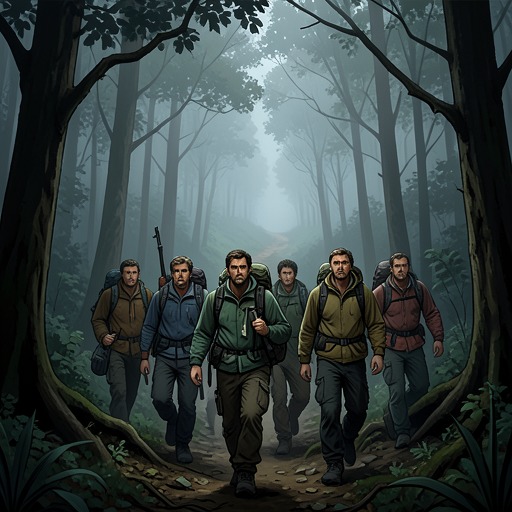
Helen sees the effects of this pace firsthand. She is among the slowest hikers, and Mason passes her with the other faster hikers as the trail inclines. The group settles into an order with taller boys in front and shorter girls behind; Beckett tells them to use their bones to support their weight rather than relying on their muscles. Against that backdrop, Mason’s insults about the girls’ speed convert a physical difference into a reason to demean them. His behavior sits uneasily beside Beckett’s instruction that teamwork is itself a wilderness skill.
Helen also describes Mason as someone she has tried to manage by staying out of his way. She considers him capable of retaliating against people who cross him, so avoiding conflict becomes a practical strategy. That caution helps explain why she does not immediately challenge him when he takes her map. His power within the group is not formal authority; it comes from his confidence, his willingness to embarrass others, and the expectation that resistance may invite more of the same.
The Shortcut and Helen’s Map
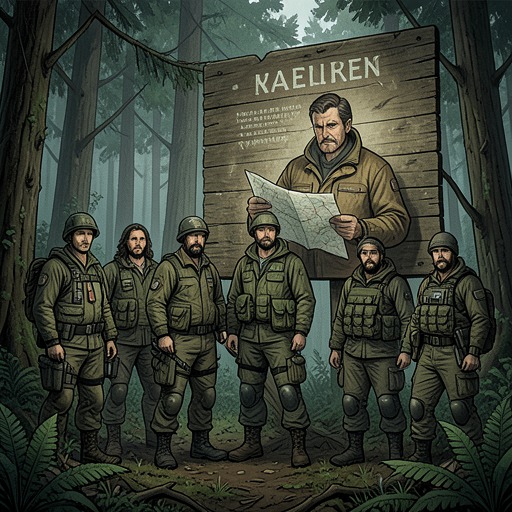
Before a later hike, Beckett has told Helen that she is the group’s best map reader, though he has not shared this assessment with Mason. Helen has also formed a fairly peaceful relationship with Mason by staying out of his way. When the group sets off, however, Mason lifts the map from her hands and says he will take it. Helen does not fight him: she knows she can read a map, but does not feel a need to make a show of that ability or assert herself against him.
Mason takes the distant lead, stopping about every twenty minutes to wait for the others. Helen and Jake keep a more conversational pace, while Dosie brings up the rear and calls for the group to hold up when she loses sight of Helen. The arrangement reproduces the tension Mason has created throughout the course: he moves ahead, and the rest must negotiate the distance he leaves between them.
As the group hikes beneath pine trees, Helen notices that the terrain does not match the route she expects. When she asks why they are going over a hill, Mason says they are taking a shortcut. Helen points out that they are not supposed to do that; Mason replies that nobody said they could not. His answer treats the absence of an explicit prohibition as permission, while Helen measures the choice against the planned route.
When Mason’s eyes widen and he slowly shakes his head in response to her question about whether he is joking, Helen takes out her compass and rotates the map until its north arrow matches the compass. Mason lets out a long whistle. The exchange does not establish everything he knows about navigation, but it places Helen, rather than the person holding the map, in the role of correcting its orientation. His confidence in taking charge and the actual need for Helen to orient the map form a pointed contrast.
Narrative Role
Mason is drawn primarily through Helen’s judgments and through visible effects on the group. Flash makes his speed memorable; the Meanie of the Mountains makes the cost of his conduct explicit. His attacks range from nicknames and insults to physical pranks, while his impatience also appears when an injury interrupts the hike and when he moves ahead of slower walkers. Together, these episodes present a consistent pattern: he treats the group’s differences as material for mockery rather than as reasons to cooperate.
The map episode gives that pattern practical stakes. Mason’s choice to lead a shortcut moves beyond interpersonal cruelty into a decision about the group’s route, and Helen’s response reveals a competence she had not needed to assert before. He takes the map, but she recognizes the mismatch with the planned course and aligns the map with her compass. The narrative therefore places his forceful presence beside her quieter judgment: Mason can set the pace and seize the object, but Helen supplies the orientation the group needs.